Independence
The Montessori Upper Elementary (UE) transition fosters independence across five key areas:
- Passage to Abstract Independence: The core cognitive shift is the transition from hands-on, concrete materials to a fully abstract understanding of concepts, enabling students to think independently and critically.
- Self-Directed Research: Lessons are grounded in Cosmic Education, which stimulates the child’s Conscious Imagination and leads to individualized, student-led research, ensuring their learning is driven by authentic motivation.
- Executive Function and Self-Management: The work plan supports greater independence by helping new students develop stronger planning, time management, and prioritization skills, thereby translating broad interests into achievable steps.
- Practical Independence (“Going Out”): Students plan and execute their own research expeditions (“Going Out”) in the community, developing complex practical skills such as logistics, financial management, and grace and courtesy without constant adult intervention.
- Long-Term Intellectual Ownership: The initial research interests pulled from the Great Lessons form a “unique fingerprint,” charting an individualized trajectory that culminates in a required, sustained, year-long capstone project in the final year, demonstrating long-term academic independence.
Order
Order in the Montessori Upper Elementary (UE) classroom
- Foundation of Cosmic Order: The curriculum provides a grand framework of intellectual order through Cosmic Education, beginning the year with the Five Great Lessons (Stories of the Universe, Life, Humans, Writing, and Numbers). This establishes a comprehensive context for all subsequent, individualized studies.
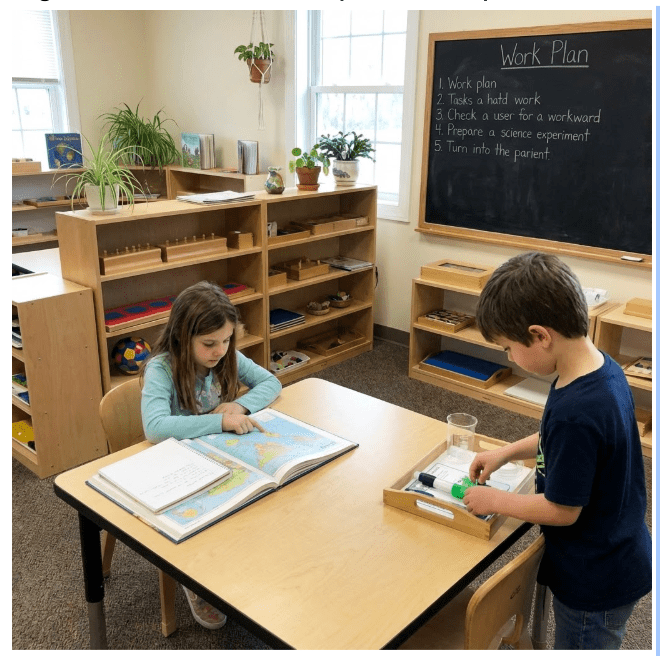
- Personal Order via the Work Plan: The main tool for organizational independence is the Work Plan, a flexible list provided by the Guide. It helps students develop Executive Function (EF) skills by translating the overwhelming number of ideas sparked by the Great Lessons into clear, achievable, and prioritized steps.
- Consistency as the Goal: At the one-month checkpoint, organizational success is measured by the student’s effort and consistent use of the work plan as a self-management tool, rather than by immediate mastery of all subjects.
- Ordered Research Process: Individualized learning is structured by teaching the mechanics of research, which inherently demands order: taking notes, developing outlines, writing drafts, and documenting sources to ensure a thorough understanding of ideas.
- Flexible Learning Order (Variable Route): The class allows each child to progress at their own pace through the “Variable Route.” This creates a structured order—students must complete one topic before moving on—while allowing them the freedom to choose the sequence of their lessons and with whom they collaborate.
 Montessori Holistic Learning